Picapoint needed a redesigned website that would better represent the agency’s creative identity while also supporting two key business goals: attracting higher-budget clients and appealing to potential new employees.
The previous website had an outdated structure and users often left the site quickly without reaching the portfolio — which was the most important asset for an agency presenting its work.
Analysis of Google Analytics showed that:
The redesign needed to improve navigation, highlight the agency’s work earlier in the journey, and create a more engaging experience that reflected the studio’s creative culture.
I was responsible for the full UX/UI process for the new website.
My responsibilities included:
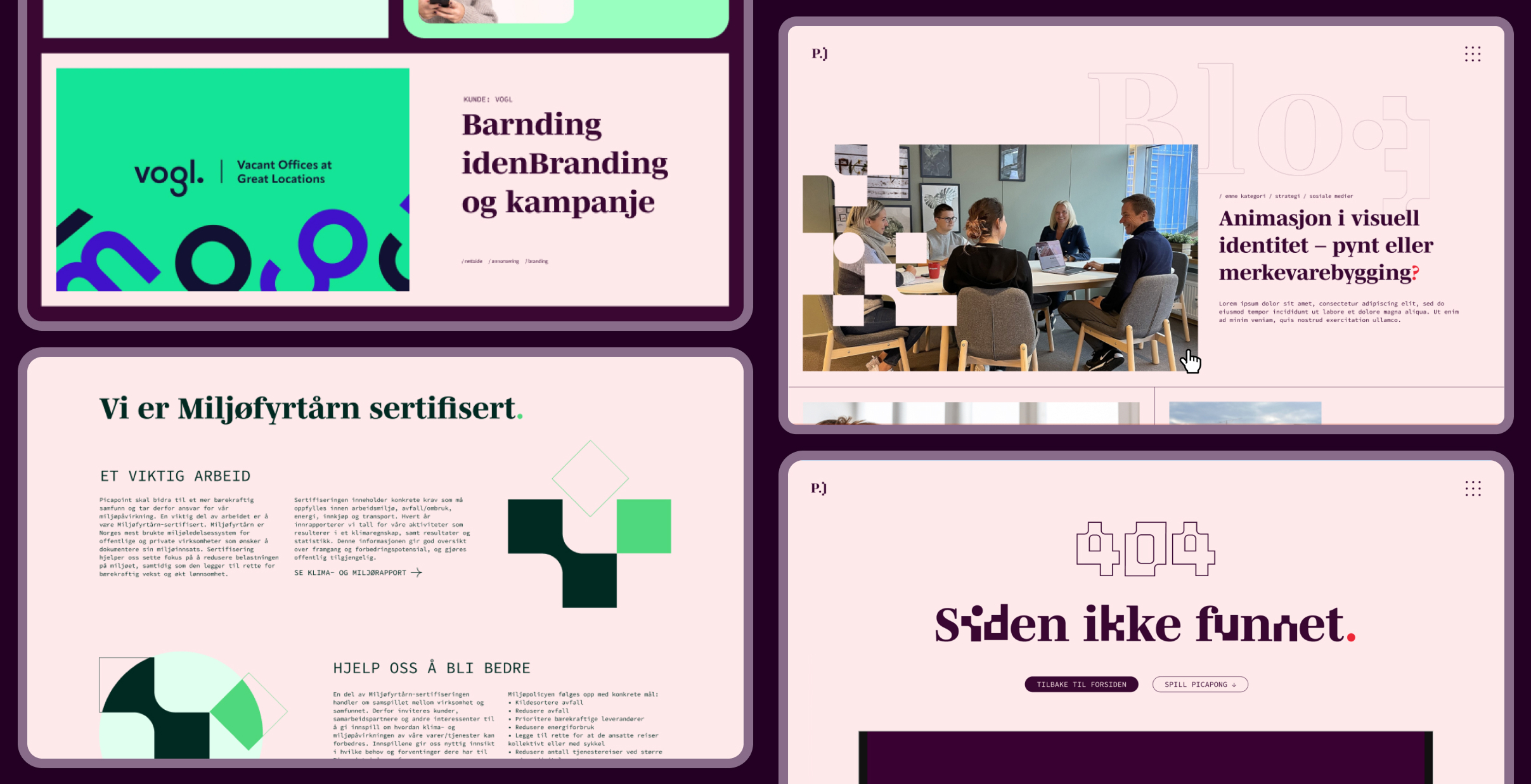
The final interface used bold colors, microanimations, and interactive elements to reflect the creative identity of the agency.
Two main user groups shaped the redesign.
Potential clients were typically marketing leaders or managers from larger companies evaluating agencies for collaboration. For them, the most important factors were:
Potential employees were creative professionals exploring the agency as a workplace. Their interest focused on:
Based on analytics insights and user journeys, the information architecture was simplified and reorganized so users could reach the most important content — the portfolio — faster.
The homepage was redesigned to highlight both recent projects and blog content, balancing visual inspiration with proof of expertise. Blog articles were placed between portfolio sections to showcase the agency’s knowledge while maintaining focus on creative work.
Microanimations and interactive effects were introduced to guide user attention and increase engagement without disrupting navigation.
The redesign resulted in a clearer and more engaging digital presence for the agency.
The new website better supported both client acquisition and employer branding by presenting the agency’s work and culture more effectively.